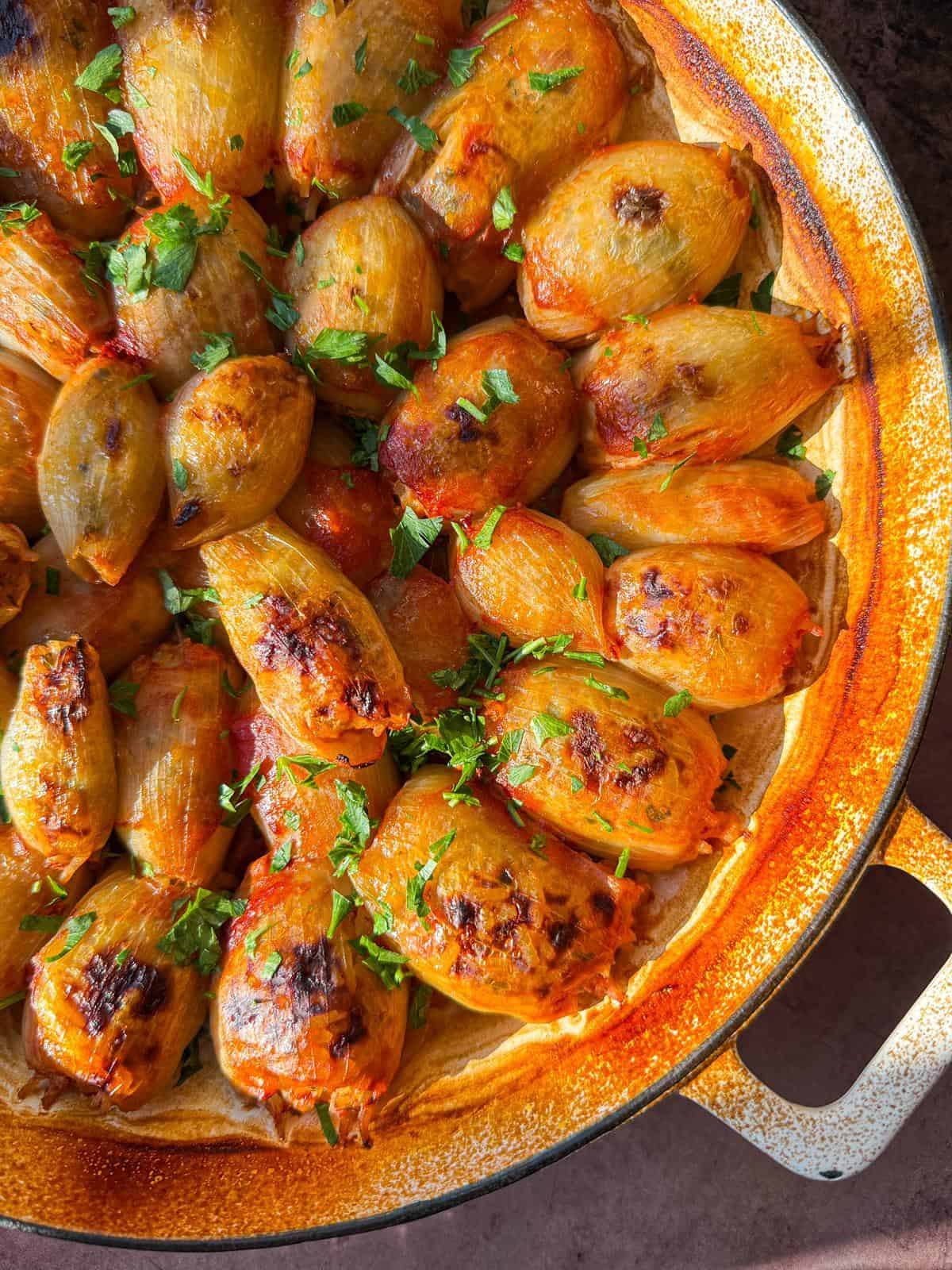
Stuffed Onions: A Culinary Embrace of Flavor and Comfort
There are dishes that simply nourish the body, and then there are those that feed the soul. Stuffed onions undeniably fall into the latter category. This magnificent creation, found in diverse kitchens across the globe, transforms humble onions into individual pockets of unparalleled flavor and warmth. Requiring a touch of patience and a generous sprinkle of love, a plate of perfectly slow-roasted stuffed onions is more than just a meal—it's an experience, a celebration of home-style comfort food at its finest.
From the hearty, meat-and-rice rich dolmas of the Middle East to the spiced varieties popular in the Balkans and Greece, the concept of encasing a delicious filling within tender onion layers transcends cultural boundaries. This article will guide you through crafting your own spectacular stuffed onions, offering versatile meat, veggie, and spice variations to suit every palate and occasion. Prepare to impress your loved ones not just with your culinary skill, but with a dish that truly embodies nourishment and affection.
The Art of Crafting Perfect Stuffed Onions
While the process of making stuffed onions requires a little effort, the reward is immeasurable. The key lies in careful preparation, ensuring both the onion shells and the filling achieve their peak potential.
Choosing and Preparing Your Onions
- Selection is Key: Opt for large, firm onions with minimal blemishes. Sweet varieties like Vidalia or Spanish onions are ideal, as their inherent sweetness complements the savory filling beautifully and they tend to be less pungent. Try to select onions of similar size for even cooking.
- The Gentle Transformation: To create pliable "bowls," first slice off about ½-inch from the top and a small amount from the root end of each onion, allowing them to sit flat. Peel away the dry outer skin. The next crucial step is to soften the onions so their layers can be separated without tearing. A common method is to par-boil them in salted water for 10-15 minutes, or steam them until tender but still holding their shape. Alternatively, some prefer to roast whole onions briefly before scooping.
- Scooping with Care: Once softened and cooled slightly, use a spoon or a melon baller to carefully scoop out the inner layers, leaving two to three sturdy outer layers intact. These hollowed-out shells are your vessels. Don't discard the scooped-out onion flesh! Mince it finely and set it aside to incorporate into your stuffing, adding an extra layer of oniony depth.
- Seasoning the Shells: Lightly sprinkle the inside and outside of your onion bowls with salt. This helps to draw out moisture and seasons the onion itself, enhancing the overall flavor of the easy stuffed onions.
Building the Perfect Stuffing Foundation
The heart of any stuffed onion recipe is its filling. A classic foundation includes rice, which absorbs the cooking liquid and flavors, resulting in a tender, cohesive stuffing. Soaking the rice for 30 minutes prior to mixing can lead to an even more tender grain in the finished dish.
Beyond rice, essential aromatics like the minced reserved onion, garlic, and fresh herbs form the aromatic backbone. This basic mix then becomes a canvas for the exciting variations we'll explore next, creating a dish that's both comforting and exquisitely complex. Once filled, the onions are typically nestled in a shallow pan, often doused in a tangy tomato-based sauce, and slow-roasted until caramelized and incredibly soft. This slow cooking process allows the flavors to meld beautifully and the onions to become melt-in-your-mouth tender.
Unleashing Flavor: Meat, Veggie & Spice Variations
The true magic of stuffed onions lies in their remarkable adaptability. Whether you're a devout carnivore, a dedicated vegetarian, or an adventurous spice enthusiast, there’s a variation waiting to tantalize your taste buds.
Meat Marvels: Rich and Hearty Fillings
The traditional approach often features a ground meat filling, delivering a satisfying richness. While ground pork offers a wonderfully juicy result, the possibilities are extensive:
- Ground Beef: A robust and universally loved choice. Opt for a lean-to-medium fat content (80/20) for optimal flavor and moisture.
- Ground Lamb: For a distinctively rich, slightly gamey flavor that pairs beautifully with Mediterranean spices.
- Ground Turkey or Chicken: Lighter alternatives that absorb flavors exceptionally well. To prevent dryness, consider a mix with a fattier meat or add extra moisture to the stuffing.
- Blended Meats: A combination, such as beef and lamb or pork and beef, can create a more complex flavor profile and texture.
Regardless of your choice, ensure the meat is well-seasoned and combined thoroughly with the rice, herbs, and other ingredients.
Vegetarian & Vegan Delights: Plant-Based Perfection
Making vegetarian stuffed onions is not just possible, it's incredibly delicious. These plant-based options ensure everyone can enjoy this beloved dish:
- Mushroom Magic: Finely chopped mushrooms (cremini, button, or a wild mushroom blend) provide an umami-rich, meaty texture. Sauté them first to release their moisture.
- Lentil Love: Green or brown lentils cooked until tender add protein and a satisfying earthiness. Combine them with rice or use them as a standalone base.
- Tofu & Tempeh: Crumbled extra-firm tofu or tempeh, seasoned and sautéed, can mimic ground meat texture.
- Beyond Meat & Plant-Based Alternatives: Modern plant-based ground "meats" offer a convenient and convincing substitute.
- Vegetable Medley: A colorful and nutrient-rich option could include finely diced zucchini, bell peppers, spinach, or even roasted sweet potatoes, mixed with rice or quinoa.
The Spice Symphony: Global Flavor Profiles
Spices are the soul of the filling, transforming it from basic to extraordinary. Beyond a simple pinch of salt and pepper, consider these additions:
- Balkan Warmth: A blend of paprika (sweet or smoked), black pepper, and perhaps a touch of dried mint or parsley.
- Middle Eastern Aromatics: Dive into complex flavors with Baharat, a blend often featuring allspice, cardamom, cinnamon, cloves, coriander, cumin, nutmeg, and black pepper. Or, a simpler mix of cumin, coriander, and turmeric. Fresh mint and parsley are also vital. For an extra kick, a pinch of chili flakes or cayenne pepper can be added to the filling or the tomato sauce.
- Greek & Mediterranean Flair: Dried oregano, dill, and a squeeze of lemon juice bring bright, herbaceous notes. As a delicious, albeit non-traditional, twist, a crumble of feta cheese mixed into the filling can add a tangy, salty burst.
Beyond the Basics: Serving, Make-Ahead & Leftovers
These majestic stuffed onions are not only a feast for the senses but also incredibly versatile when it comes to serving, preparation, and utilizing every last bit.
Serving Suggestions for Any Occasion
While often taking center stage as a main course, especially when made with a robust meat filling, stuffed onions can easily adapt:
- The Star of the Show: Serve as the main attraction with a side of crusty bread to sop up the delicious sauce, a simple green salad, or a dollop of cooling yogurt or sour cream.
- Holiday Side Dish: Their impressive presentation makes them perfect for holiday tables or dinner parties. They can accompany roasted meats or other festive dishes.
- Appetizer Elegance: For smaller onions, serve them as a sophisticated appetizer, perhaps with a toothpick for easy handling.
For more inspiration on their cultural significance, consider exploring Stuffed Onions: A Global Comfort Food Tradition.
Make-Ahead Magic and Freezing Tips
Given the preparation time, stuffed onions are an ideal make-ahead dish, perfect for entertaining:
- Prepare Ahead: You can prepare the onion shells and the stuffing mixture a day in advance. Store them separately in airtight containers in the refrigerator. Assemble and bake just before serving.
- Freeze Unbaked: Assemble the stuffed onions in a freezer-safe baking dish, cover tightly with foil, and freeze for up to 2-3 months. When ready to bake, thaw overnight in the refrigerator and then bake as directed, possibly adding a bit more cooking time.
- Freeze Baked: Baked stuffed onions also freeze well. Once cooled, individual portions can be frozen in airtight containers or freezer bags. Reheat gently in the oven or microwave.
Don't Waste a Single Bit: Leftover Onion Hearts
After scooping out the onion layers, you'll be left with the tender, sweet hearts of the onions. True to the ethos of minimizing food waste, these flavorful remnants are too good to discard!
- Roasted Delight: Toss them with olive oil, salt, pepper, and your favorite herbs (rosemary, thyme) and roast alongside the stuffed onions or in a separate dish until caramelized and tender.
- Flavorful Additions: Mince them and add to omelets, frittatas, stir-fries, soups, stews, or sautés.
- Sweet Component: Caramelize them slowly for a sweet onion jam or topping for burgers and sandwiches.
Conclusion
Stuffed onions are more than just a recipe; they are a culinary journey, a testament to the power of simple ingredients transformed into something extraordinary through patience and passion. Whether you opt for a traditional meat-and-rice filling, explore the vibrant world of plant-based variations, or experiment with exotic spice blends, the result is always a deeply satisfying and comforting meal. They are a dish that speaks of home, tradition, and shared moments around the dinner table. So, embrace the process, savor the aromas, and prepare to delight your senses with these incredible, versatile bundles of flavor.
